6524 - Granulomatous rhinitis
DBQ: Link to Index of DBQ/Exams by Disability for DC 6524
Definition
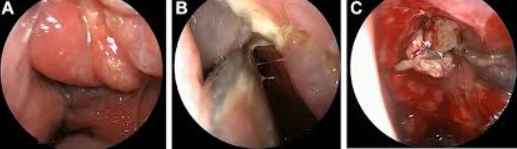
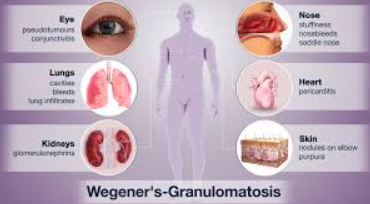
Granulomatous rhinitis is an inflammation of the nasal mucosa and granulomas of the nose. A granuloma is a tumor or growth that occurs when macrophages are unable to destroy foreign bodies and some mycobacteria. The condition is associated with Wegener's granulomatosis that begins as a localized granulomatous inflammation of upper or lower respiratory tract mucosa.
Etiology
Granulomatous rhinitis is due to the formation of the granuloma. The cause of Wegener's granulomatosis is unknown. It resembles an infectious process; however, no causative agent has been isolated.
Signs & Symptoms
Signs and symptoms of the condition are hemorrhagic rhinorrhea, paranasal sinusitis, nasal mucosal ulceration with secondary bacterial infection, nasal lesions, serous or purulent otitis media. The condition is often mistaken for chronic sinusitis. On visual inspection, the nasal mucosa membrane has a red, raised granular appearance, is easily broken, and bleeds easily. Nasal perforation may also occur.
Tests
Tests focusing on diagnosing Wegener's granulomatosis are used. In addition, tests used to diagnosis this condition are biopsy of the tissue of the nose, and sputum samples. Early diagnosis is crucial.
Treatment
The primary focus is to treat the underlying cause, Wegener's granulomatosis, with immunosuppressive cytotoxic drugs, and corticosteroids. Early diagnosis and prompt treatment are crucial because a high remission rate is often possible. Long-term prophylactic treatment may be used after initial drug therapy. Treatment may also include treating the signs and symptoms of chronic rhinitis. (See Diagnostic Code: 6522 Allergic or vasomotor rhinitis and Diagnostic Code: 6523 Bacterial rhinitis)
Residuals
This is a long-term condition, and remission can be achieved with early diagnosis and therapy. This condition may progress into generalized necrotizing granulomatous vasculitis and glomerulonephritis. If there are lesions in other systems and, if the condition is not detected early, the prognosis is unfavorable.
Special Considerations
-
May be entitled to special monthly compensation where the Veteran has a single service-connected disability rated as 100% with additional service-connected disability or disabilities independently ratable at 60% or more, which are separate and distinct from the 100% service-connected disability and involves different anatomical segments or bodily systems. See 38 CFR 3.350(i)(1) – Special Monthly Compensation (SMC).
-
Consider entitlement to service connection based on presumed exposure to fine particulate matter under 38 CFR 3.320
Notes
-
None.